
Quality Child Care Langley: Why It Matters for Early Childhood Development
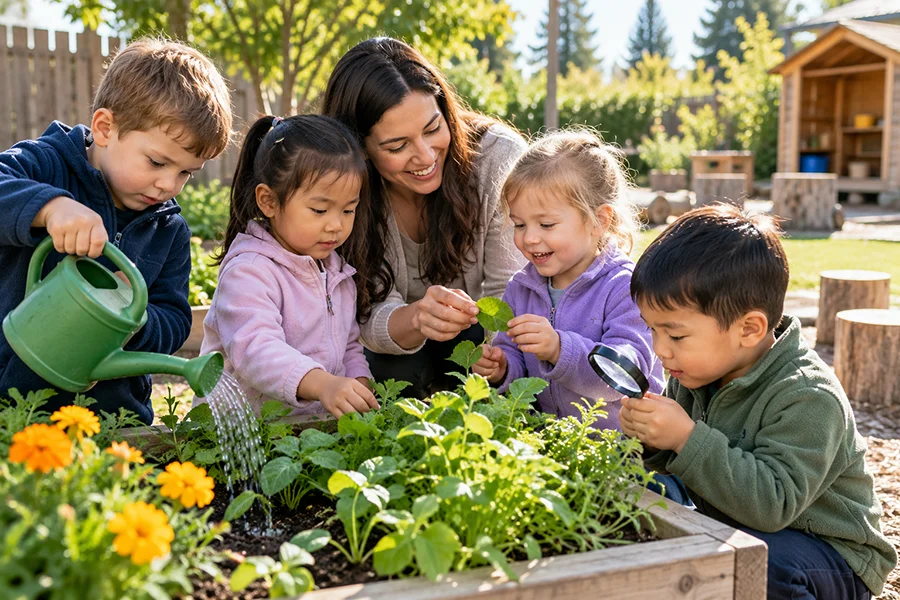
Finding the right child care is about much more than choosing a convenient location. During the early years, children are developing language, confidence, social skills, independence, physical coordination, and the habits that shape how they approach learning. For families comparing quality child care Langley options, the environment a child experiences every day can make a meaningful difference.
A strong early learning program should provide safety, warmth, structure, meaningful activities, and opportunities for children to explore at their own pace. At BrainBox Montessori Learning Academy, the goal is to create a caring environment where children can learn through hands-on experiences while building confidence and independence.
What Does Quality Child Care Really Mean?
Parents often use the phrase “quality child care,” but quality is not defined by a beautiful classroom alone. Good child care combines a safe environment, attentive educators, age-appropriate learning, predictable routines, positive relationships, and clear communication with families.
When parents search for quality child care Langley services, they should look at the complete experience their child will receive throughout the day. Children need opportunities for active play, quiet concentration, conversation, creativity, movement, outdoor exploration, and social interaction.
Quality also means recognizing that every child develops differently. Some children are naturally outgoing, while others need more time to observe before joining a group. Some are ready for complex practical tasks, while others are still developing basic coordination. A thoughtful program responds to these differences rather than expecting every child to learn in exactly the same way.
1. Quality Child Care Supports Social and Emotional Development
Early childhood is an important period for learning how to communicate, cooperate, share, wait, solve small conflicts, and express feelings. These abilities grow through everyday interactions with teachers and other children.
In a quality child care Langley environment, educators guide children through these experiences with patience and consistency. Rather than simply stopping a disagreement, a teacher can help children find words for what they feel, listen to another child, and work toward a solution.
These daily experiences gradually build emotional confidence. Children begin to understand that they can ask for help, communicate their needs, and participate successfully in a group.
2. Language Develops Through Everyday Interaction
Young children learn language throughout the entire day. Conversation during play, stories, songs, classroom discussions, practical activities, and one-on-one interaction all contribute to vocabulary and communication skills.
Parents comparing quality child care Langley programs should notice how teachers speak with children. Are children encouraged to ask questions? Do teachers introduce new vocabulary? Are stories and books part of the environment? Is there time for children to describe what they are doing and thinking?
A language-rich classroom helps children become confident communicators. This foundation later supports reading, writing, comprehension, and participation at school.
3. Hands-On Learning Builds Understanding
Young children learn especially well when they can touch, move, sort, arrange, compare, pour, build, count, and explore. Hands-on learning turns abstract ideas into experiences children can understand.
This is one reason Montessori education can work well within a quality child care Langley program. Montessori materials and practical activities encourage children to learn through purposeful movement and direct experience.
A child may strengthen coordination by pouring water, develop visual discrimination by matching objects, prepare for mathematics by sorting quantities, or build concentration by completing a multi-step activity. The learning may look simple from the outside, but each activity can support several areas of development at the same time.
4. Independence Builds Confidence
Children naturally want to do things for themselves. A supportive early learning environment gives them appropriate opportunities to practice.
Child-sized furniture, accessible materials, simple routines, and patient guidance can help children learn to put away activities, wash their hands, carry materials carefully, make choices, dress themselves, and take responsibility for small parts of their day.
When evaluating quality child care Langley choices, parents should look for a healthy balance between teacher support and child independence. Teachers should be available when help is needed, but children should also have space to try, repeat, make small mistakes, and succeed.
Each successful experience sends an important message to a child: “I can do this.”
5. Predictable Routines Help Children Feel Secure
A well-organized day provides children with a sense of security. They begin to understand what happens after arrival, when they will eat, when they can play outside, when quieter activities take place, and when their parents will return.
A quality child care Langley program should have enough structure to make the day predictable without making it rigid. Young children still need flexibility because energy levels, interests, emotions, and developmental needs can change from day to day.
Consistent routines also support independence. Once children understand the sequence of the day, they can participate more actively instead of waiting for adults to direct every step.
6. The Physical Environment Influences Learning
The classroom itself plays an important role in early childhood development. A calm, organized environment can make it easier for children to focus, choose activities, move safely, and take responsibility for materials.
When visiting quality child care Langley centres, parents can observe whether materials are accessible to children, whether furniture is appropriate for their size, whether activities are organized clearly, and whether there are spaces for both active and quiet learning.
A thoughtfully prepared environment invites children to explore. Instead of relying on constant adult entertainment, children can select meaningful activities and become more engaged in their own learning.
7. Outdoor Play Is Part of Healthy Development
Running, climbing, balancing, digging, observing nature, and playing with friends outdoors support physical development as well as social and emotional well-being.
Families considering quality child care Langley options should ask how outdoor time fits into the daily routine. Outdoor play gives children opportunities to strengthen large muscles, practice coordination, take appropriate physical challenges, and experience the natural environment.
It also provides a different kind of learning. A walk, a leaf, changing weather, insects, soil, plants, and seasonal changes can all become starting points for conversation and discovery.
8. Strong Parent-Teacher Communication Creates Consistency
Children benefit when families and educators communicate well. Parents understand their child better than anyone, while educators observe the child in a group learning environment. Sharing those perspectives can help both sides provide more consistent support.
A quality child care Langley provider should make parents feel comfortable asking questions and discussing their child’s development. Communication may include conversations at drop-off or pick-up, progress updates, newsletters, photographs, meetings, or other methods used by the centre.
The format is less important than the quality of the relationship. Parents should feel that concerns will be heard and that important information will be communicated clearly.
9. School Readiness Is More Than Academics
It is easy to think that preparing for kindergarten means learning letters and numbers as early as possible. Academic foundations are useful, but school readiness includes much more.
Children also need confidence, curiosity, concentration, communication skills, self-help abilities, emotional regulation, and experience functioning as part of a group.
The strongest quality child care Langley programs therefore support the whole child. Early literacy and numeracy can be introduced naturally alongside practical life skills, movement, art, music, social interaction, and independent exploration.
A child who enjoys learning and feels capable is building a strong foundation for future education.
10. Visit the Child Care Centre Before Making a Decision
Online research is useful, but an in-person visit can reveal details that are difficult to understand from a website.
When visiting a quality child care Langley centre, parents can observe how teachers greet children, how children interact with one another, how the classroom is arranged, and whether the atmosphere feels calm, positive, and engaging.
Consider asking:
- Is the environment clean, safe, and organized?
- Do teachers interact warmly and respectfully with children?
- Are children actively engaged in meaningful activities?
- Is there a balance of independent and group learning?
- How are daily routines organized?
- How does the centre communicate with parents?
- What opportunities are available for outdoor play?
- How does the program encourage independence?
Parents should choose a setting that feels right not only on paper but also in person.
Why Choose a Montessori Approach?
Montessori education is built around respect for the child, purposeful activity, hands-on learning, independence, concentration, and a carefully prepared environment. These principles can complement the qualities parents are already looking for in child care.
For families seeking quality child care Langley programs, a Montessori environment can offer children opportunities to choose meaningful work, practice practical life skills, learn through specialized materials, and progress at an appropriate pace.
The objective is not to rush children academically. It is to help them become confident, capable, curious, and increasingly independent learners.
Choosing Quality Child Care Langley Families Can Feel Good About
There is no single child care program that is perfect for every family. Parents need to consider their child’s personality, developmental needs, schedule, location, educational preferences, and the overall feeling they get from the centre.
However, the fundamentals of quality remain consistent: children should feel safe, respected, supported, and engaged. They should have caring adults around them, meaningful learning opportunities, room to move and explore, and time to build relationships.
For parents researching quality child care Langley options, BrainBox Montessori Learning Academy offers a Montessori-focused early learning environment designed to support children’s independence, confidence, social growth, and love of learning.
Contact BrainBox Montessori Learning Academy to learn more about our programs or arrange a visit. Seeing the environment in person can help you decide whether it is the right fit for your child and family.