
Early Childhood Education in Langley Building Confidence and Independence
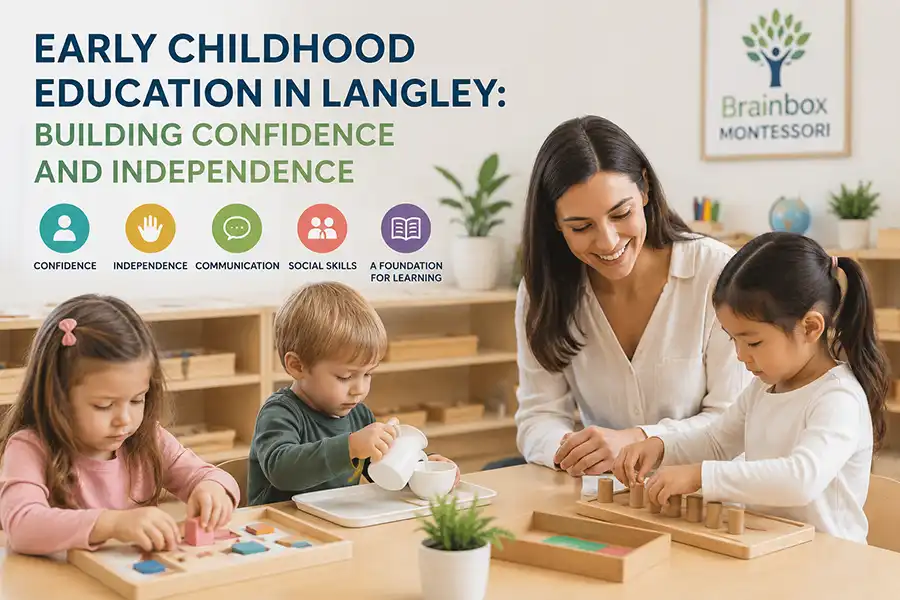
The early years of childhood are filled with rapid growth. Young children are learning how to communicate, move, solve problems, manage emotions, build relationships, follow routines, and understand the world around them.
High-quality early childhood education in Langley can provide children with a supportive environment where these skills develop through meaningful activities, positive relationships, and consistent daily experiences.
Early education is not simply preparation for elementary school. It is a stage of development with its own important goals. Children need opportunities to explore, practise, make choices, interact with others, and develop confidence in their abilities.
Early Childhood Education in Langley Supports the Whole Child
A strong early childhood program considers more than academic skills. It supports several areas of development at the same time.
These areas may include:
- Social development
- Emotional development
- Language and communication
- Fine motor skills
- Gross motor skills
- Cognitive development
- Creativity
- Independence
- Self-care
- Concentration
- Problem-solving
These areas are connected. For example, a child completing a practical activity may develop hand control, concentration, confidence, vocabulary, and sequencing skills during the same experience.
Confidence Grows Through Meaningful Success
Children build confidence when they are given realistic opportunities to succeed.
This does not mean that every activity should be easy. Children need tasks that are challenging enough to encourage effort but achievable with practice and appropriate guidance.
A child may feel proud after:
- Completing a puzzle
- Pouring a drink
- Putting on a jacket
- Remembering a classroom routine
- Learning a new word
- Sharing an idea
- Helping a classmate
- Cleaning up independently
- Finishing an art activity
- Solving a simple problem
These experiences teach children that their actions can produce meaningful results.
Early childhood educators in Langley can support confidence by demonstrating activities, giving children enough time, and avoiding unnecessary interruption.
Independence Develops Through Daily Practice
Independence does not develop all at once. It grows through repeated opportunities.
In an early childhood education in Langley program, children may practise caring for themselves, choosing activities, organizing materials, cleaning their workspace, and participating in classroom routines.
An environment that encourages independence might include:
- Child-sized furniture
- Accessible learning materials
- Clearly organized shelves
- Predictable routines
- Simple visual cues
- Practical life activities
- Opportunities to make limited choices
- Time to complete tasks without being rushed
When the classroom is designed for children, they are less dependent on adults for every action.
Social Skills Develop in a Group Environment
Early childhood education gives children regular opportunities to interact with classmates.
Children gradually learn how to:
- Take turns
- Listen to others
- Express their needs
- Join activities
- Share materials
- Respect personal space
- Respond to disagreement
- Wait patiently
- Offer help
- Participate in group routines
Young children are still developing these abilities, so conflict is a normal part of learning. Educators can guide children to use words, recognize emotions, and find respectful solutions.
Rather than immediately solving every disagreement for children, educators may help them understand what happened and consider what they can do next.
Language Development Happens Throughout the Day
Language learning is not limited to formal lessons. Children develop communication skills through conversations, stories, songs, questions, observations, and social interactions.
Educators can support language by:
- Naming objects and actions
- Reading books
- Asking open-ended questions
- Introducing new vocabulary
- Listening patiently
- Encouraging children to explain ideas
- Singing and using rhymes
- Discussing classroom activities
- Modelling respectful communication
Children also learn language from one another. Group environments expose them to different ideas, expressions, and communication styles.
An effective early childhood education in Langley program should provide many opportunities for children to listen and speak without forcing every child to communicate in the same way.
Hands-On Learning Makes Concepts Understandable
Young children learn effectively through direct experience.
They benefit from touching, moving, sorting, building, counting, carrying, drawing, comparing, and experimenting. Hands-on learning allows children to investigate how things work rather than only receiving information from an adult.
Activities may introduce concepts such as:
- Size
- Shape
- Quantity
- Pattern
- Texture
- Sound
- Weight
- Sequence
- Cause and effect
- Classification
These experiences create a foundation for later academic learning. Before children work confidently with abstract symbols, they often benefit from exploring concrete materials.
Movement Supports Physical and Cognitive Development
Children need opportunities to move their bodies throughout the day.
Gross motor activities may include running, balancing, climbing, throwing, dancing, stretching, or outdoor play. Fine motor activities may involve drawing, cutting, threading, transferring objects, building, or handling small learning materials.
Physical development supports more than strength and coordination. Movement can also contribute to attention, confidence, body awareness, spatial understanding, and self-regulation.
A balanced early childhood education in Langley program should not expect young children to remain seated for long periods.
Predictable Routines Create Security
Young children often feel more comfortable when they understand what will happen next.
A predictable daycare or preschool routine may include:
- Arrival
- Independent activities
- Group gathering
- Snack
- Outdoor play
- Lunch
- Rest or quiet time
- Creative activities
- Preparation for pickup
The schedule does not need to be rigid, but it should be consistent enough for children to recognize the general sequence of the day.
Predictability helps children prepare for transitions and reduces uncertainty. It also allows them to take more responsibility because they begin to remember what they need to do at each stage.
Educators Play an Important Role
Early childhood educators create the conditions in which learning can occur.
Their responsibilities may include:
- Preparing the classroom
- Selecting appropriate materials
- Observing development
- Guiding social interactions
- Supporting communication
- Maintaining safety
- Establishing routines
- Communicating with parents
- Adapting activities
- Encouraging independence
- Responding to individual needs
Effective educators understand when to provide assistance and when to allow a child time to solve a problem.
They also recognize that children develop at different rates. A child who is confident in language may still need support with social transitions, while another child may be physically independent but quieter during group activities.
Montessori Education and Early Childhood Development
Montessori education supports early development by combining structure with purposeful choice.
Children work with hands-on materials in a carefully prepared environment. They are encouraged to complete tasks, care for shared spaces, make appropriate choices, and develop concentration.
Montessori learning areas may include practical life, sensorial development, language, mathematics, culture, art, and nature.
The educator guides the environment but does not control every moment. This gives children opportunities to become active participants in their learning.
For families researching early childhood education in Langley, a Montessori program may be appealing because of its focus on independence, order, respect, and real-life skills.
The Importance of Family and Educator Communication
Children benefit when parents and educators work together.
Parents can share information about the child’s routines, interests, language, health, family changes, and previous childcare experiences. Educators can provide observations about the child’s activities, relationships, progress, and adjustment.
Regular communication helps both sides understand the child more fully.
Parents should feel comfortable asking questions about:
- Daily routines
- Eating and rest
- Social development
- Classroom activities
- Behaviour guidance
- Communication skills
- Independence
- Transition challenges
- Program expectations
Communication should be respectful, clear, and focused on supporting the child.
Choosing Early Childhood Education in Langley
When comparing programs, parents should consider the overall environment rather than focusing on one feature.
A quality program should provide:
- Safe and organized classrooms
- Attentive educators
- Age-appropriate activities
- Opportunities for movement
- Consistent routines
- Respectful communication
- Hands-on learning
- Support for independence
- Time for social interaction
- A clear educational philosophy
Parents should visit the program, observe the environment, ask questions, and consider how their child responds to the classroom.
Brainbox Montessori provides early learning experiences designed to help children build independence, confidence, concentration, practical skills, and respect for others.
Families looking for early childhood education in Langley can contact Brainbox Montessori to learn more about its educational approach, classroom environment, program schedules, enrollment process, and current availability.