
Preschool Surrey: 7 Signs Your Child Is Ready for Preschool (and What to Do Next)
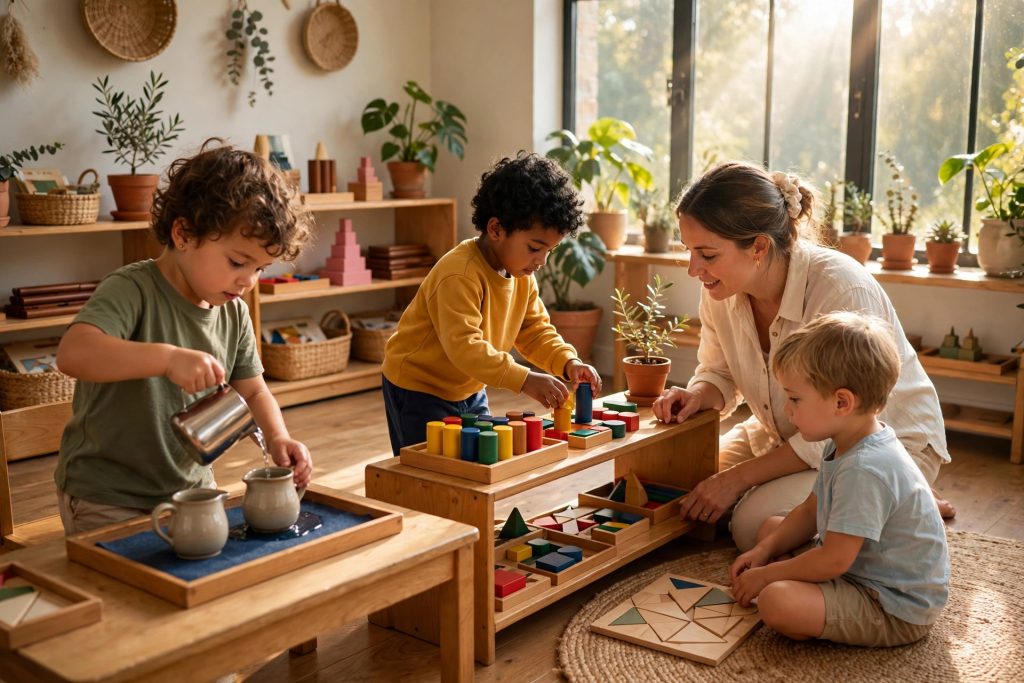
If you’re on the fence about enrolling your little one in a preschool Surrey program this year, you’re in good company. Every year, thousands of local parents of 3- to 5-year-olds ask the same question: is my child actually ready — or should we wait?
Here’s the reassuring part: readiness is rarely about a single birthday. It’s a cluster of small, observable behaviours — settling after drop-off, curiosity about other children, basic self-care with a little help. When several of those signs line up, children tend to thrive from day one.
This guide covers the seven readiness signs educators watch for, the three that matter most, what to do if your child shows only some of them, and how to choose the right preschool Surrey families trust once the signs say go.
Table of Contents
- The 7 Readiness Signs at a Glance
- Sign 1: Separates from You Without Extended Distress
- Sign 2: Shows Interest in Other Children
- Sign 3: Basic Self-Care Is Emerging
- Sign 4: Follows Simple Multi-Step Directions
- Sign 5: Language Is Taking Off
- Sign 6: Curiosity Outweighs Caution
- Sign 7: Handles a Predictable Routine
- The 3 Signs That Matter Most
- What If Your Child Shows Only Some of the Signs?
- Choosing the Right Preschool Surrey Program
- Questions to Ask on a Preschool Tour
- Red Flags to Watch For on Your Visit
- Frequently Asked Questions
- Ready When They Are: Your Next Step
The 7 Readiness Signs at a Glance
When preschool Surrey educators assess a new child, they aren’t looking for academic skills — nobody expects a three-year-old to read or write. Instead, teachers watch for functional, social, and emotional foundations, the real predictors of a smooth start:
- Separates from parents without extended distress
- Shows genuine interest in other children
- Manages basic self-care — toileting, handwashing, opening lunch containers — with minimal help
- Follows simple two-step directions
- Communicates needs and ideas in short sentences
- Shows curiosity about new materials and activities
- Copes with a predictable daily routine
If your child checks most of these boxes, they’re likely ready. If only a few sound familiar, read on — we’ll help you decide whether to enrol now or wait a few months.
Sign 1: Separates from You Without Extended Distress
Separation is the number-one worry parents mention — and the fastest thing to resolve, teachers say. A few tears at drop-off in week one are normal; even confident children test the goodbye ritual. What matters is recovery: does your child settle within 10 to 15 minutes and engage?
Practise at home long before September: build a short, upbeat goodbye ritual — same words, same hug, same wave — and keep it under a minute. Long, emotional farewells signal that separation is something to fear. Arrange short separations with grandparents or trusted caregivers so your child learns the key lesson: you always come back. If your child has never spent time away from you, consider a gradual-start program with short sessions before committing to full days.
Sign 2: Shows Interest in Other Children
Preschool is a social place first. Your child doesn’t need a best friend — parallel play is exactly right for young threes. What matters is interest: does your child watch other children or light up when a peer joins in?
At a quality preschool Surrey program, teachers gently scaffold these early interactions rather than forcing them. They narrate what they see, model turn-taking language, and give children words for big feelings. That guided social practice is one of the biggest developmental gains of the preschool years.
Nurture this at home with library story times, playground visits, and small playdates — low-pressure settings where your child practises being around peers while you’re nearby.
Sign 3: Basic Self-Care Is Emerging
Most preschool Surrey classrooms expect children to be working toward toileting independence, though expectations vary — always ask directly. Beyond that, teachers hope to see emerging self-care: washing hands with a reminder, opening a lunch container, putting on shoes (Velcro counts!).
Perfection isn’t the goal; willingness is. A child who tries adapts quickly, because every classroom routine becomes built-in practice. Montessori classrooms treat “practical life” — pouring, buttoning, sweeping — as core curriculum, so independence grows all day long.
Build these skills through everyday participation, not drills: let your child pour water from a small pitcher, choose between two outfits, and help set the table.
Sign 4: Follows Simple Multi-Step Directions
Preschool days run on gentle sequences: hang up your backpack, wash your hands, choose a work mat. Children who follow two-step directions at home typically slide into classroom routines with ease.
If two steps are still tricky, practise with playful games: “First touch something red, then hop to the door.” Keep instructions short, get down to eye level, and give one sequence at a time.
Teachers also watch whether a child can refocus after an interruption — a skill that grows quickly once classroom rhythms feel familiar.
Sign 5: Language Is Taking Off
Your child doesn’t need perfect grammar — just functional communication: can they tell a teacher “I need help” or “I’m thirsty”? Language-rich preschool Surrey environments accelerate this fast, because children are surrounded by conversation all day.
Reading aloud daily is the single highest-leverage thing you can do at home: talk about the pictures, ask “what happens next,” and let your child retell favourite stories. If you have concerns about speech or hearing, check with your family doctor before September — early support works best.
Sign 6: Curiosity Outweighs Caution
Watch your child somewhere new — a children’s museum, a nature trail, a friend’s playroom. Do they hang back for a minute, then dive in? That pattern, caution followed by curiosity, is the ideal preschool temperament.
A well-designed preschool Surrey classroom meets that curiosity halfway. The Association Montessori Internationale describes “sensitive periods” — windows when children are intensely drawn to order, language, movement, or social behaviour. A prepared classroom answers with hands-on materials rather than worksheets, which is why our Montessori curriculum centres on touchable, self-correcting activities.
At home, follow your child’s questions instead of redirecting them — a twenty-minute fascination with worms beats a forced flashcard session.
Sign 7: Handles a Predictable Routine
Preschool days have a rhythm: arrival, circle time, work period, snack, outdoor play, rest, goodbye. Children with predictable anchors at home — regular mealtimes, a bedtime routine — adapt faster.
If your days are free-flowing, add gentle structure a month or two before preschool begins: a visual schedule with pictures gives young children the same security a classroom routine provides.
Also consider stamina: a full preschool morning outlasts most home routines, so gradually stretch focused play and keep a consistent bedtime.
The 3 Signs That Matter Most
Ask any experienced preschool Surrey teacher which signs predict the smoothest transitions, and three come up again and again:
Separation recovery. Not the absence of tears — the ability to settle within minutes, freeing energy for play and learning.
Functional communication. A child who can express needs gets help faster and frustrates less — almost everything else builds on this.
Interest in peers. Curiosity about other children is the engine of preschool social growth — a child who watches or imitates peers absorbs social skills rapidly.
If your child shows these three, the other four typically catch up within weeks — the classroom itself becomes the teacher.
What If Your Child Shows Only Some of the Signs?
First, don’t panic — partial readiness is the norm, not the exception. Very few three-year-olds check all seven boxes in September. Here’s how experienced preschool Surrey educators think about it:
- Five or six signs: Enrol with confidence — just mention the wobbly areas so the teacher can offer extra support in the first month.
- Three or four signs: Very workable — especially if the “big three” above are among them. Consider starting with shorter days and building up; check our programs and hours for a schedule that matches your child’s stamina.
- One or two signs: A few more months may serve your child better. Keep practising at home, revisit in three months, or try a parent-participation class as a bridge.
In B.C., kindergarten starts the September a child turns five, so a just-turned-three has two full preschool years ahead — no rush.
Choosing the Right Preschool Surrey Program
Once the signs say go, the next question is where. The best preschool Surrey has to offer feels calm and joyful the moment you walk in — children engaged, teachers at eye level.
When comparing preschool Surrey options, look beyond the brochure: educator qualifications and turnover, group sizes and ratios, the transition plan, and what a typical day actually looks like.
Philosophy matters too. Montessori programs group children in multi-age classrooms where younger children learn by watching older ones — a powerful fit for the peer-curiosity sign above. Read why families choose a Montessori daycare in Langley to see the difference day to day. And if a younger sibling is at home, our guide to choosing child care in Langley helps you plan for the whole family.
Finally, trust practicalities: location on your commute route, hours that match your workday, and a waitlist policy you understand.
Questions to Ask on a Preschool Tour
Bring this list when you tour a preschool Surrey program — the answers reveal more than any website:
- What do the first two weeks look like for a new child? (Look for a gradual, individualized transition plan.)
- What are your educator-to-child ratios, and how long has the current teaching team been here?
- How do you handle separation struggles, biting, or conflict between children?
- How much outdoor time do children get, and how much is unstructured play?
- How do you communicate with parents — daily updates, photos, conferences?
- What are your toileting expectations for children who aren’t fully independent yet?
For a deeper checklist on evaluating licensed centres in general, see what to look for in a licensed childcare centre.
Red Flags to Watch For on Your Visit
A preschool Surrey tour should leave you feeling reassured, not uneasy. Walk away — politely — if you notice:
- Teachers who seem overwhelmed, disengaged, or speak sharply to children
- Classrooms that are chaotic or, conversely, silent and rigidly controlled
- No clear sick-child, allergy, or emergency policies when you ask
- Reluctance to let you observe a classroom or meet the actual teachers
- High-pressure enrolment tactics (“this spot will be gone tomorrow”)
Your instincts count. If something feels off during a thirty-minute visit, imagine how it would feel every morning for a year.
Frequently Asked Questions
At what age can children start a preschool Surrey program?
Most preschool Surrey programs accept children from 30 months to 3 years, with classrooms typically serving ages 3 to 5. Always confirm the age range — licensing ratios differ by age group, which directly affects availability.
My child isn’t fully toilet-trained. Can they still start preschool?
Often, yes. Some programs require independence; others support children still learning. A good preschool Surrey classroom treats toileting as a developmental process, not an entrance exam — peer modelling often finishes the job within weeks.
How far in advance should we apply?
Popular preschool Surrey programs fill their September intake by early spring — sometimes February. For a fall start, tour in January or February and join waitlists promptly. Mid-year spots do open as families move, so it’s always worth asking later in the year.
Is Montessori preschool better than traditional preschool?
Neither is universally “better” — it depends on your child, a question many preschool Surrey families wrestle with. Montessori classrooms emphasize self-directed, hands-on learning in multi-age groups; traditional programs offer more teacher-led group activities. Tour both and choose the one where your child lights up.
What does preschool cost in Surrey, and is there financial help?
Fees vary by program type, hours, and age group — full-time preschool typically costs less than infant or toddler care. B.C. families should explore the provincial Affordable Child Care Benefit and ChildCareBC fee reduction. Ask any program which funding it takes part in.
Ready When They Are: Your Next Step
You know your child better than any checklist. If the signs above describe your little one, they’re telling you something: they’re ready for a bigger world.
The right preschool Surrey experience starts with a visit. Come see a classroom in action and meet the educators who would guide your child. Book a tour today — we’d love to show you what the preschool years can look like.