
Montessori Child Care Langley: Helping Children Learn Through Independence
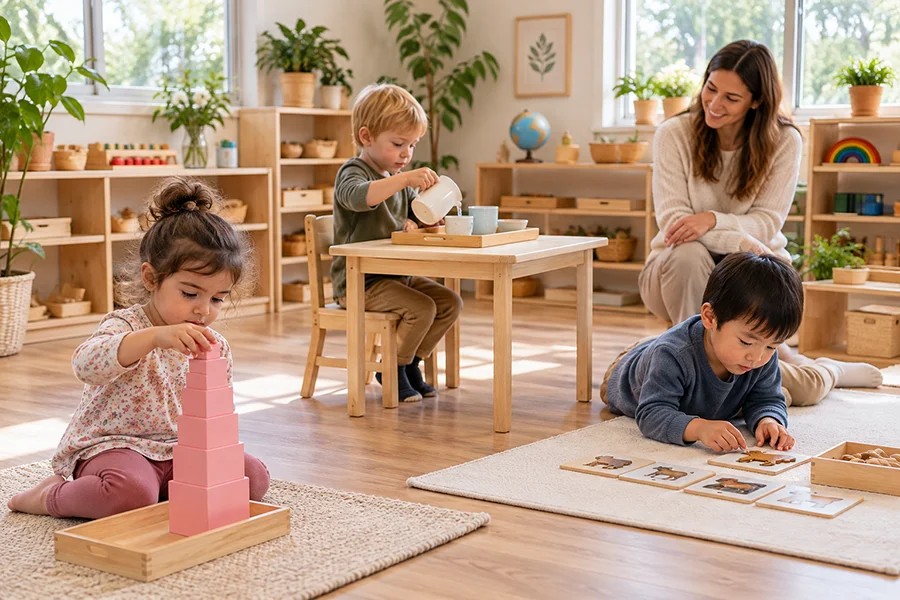
Every parent wants their child to grow into a confident, capable, and independent person. During the early years, children are constantly learning how to communicate, make choices, solve problems, care for themselves, and interact with others. Choosing the right Montessori child care Langley program can provide children with daily opportunities to practice these important skills in a safe and supportive environment.
Montessori education is designed around the idea that children learn best when they are actively involved in meaningful experiences. Instead of relying only on teacher-directed instruction, children are encouraged to explore carefully prepared materials, practice practical life skills, make age-appropriate choices, and gradually become more independent.
At BrainBox Montessori Learning Academy, this approach helps children develop confidence while building a strong foundation for future learning.
What Makes Montessori Child Care Different?
Traditional child care programs and Montessori programs may share many goals, including safety, social development, language growth, and school readiness. The Montessori approach, however, places particular emphasis on independence, hands-on learning, concentration, order, and respect for each child’s individual development.
In a Montessori child care Langley environment, the classroom is carefully organized so children can access many materials independently. Shelves are typically arranged at child height, activities have a clear purpose, and children are encouraged to complete tasks and return materials when they are finished.
This creates an environment where children can gradually learn to take responsibility for their own actions.
1. Independence Begins With Everyday Activities
Independence does not begin with difficult academic work. It begins with simple daily experiences.
Young children often want to pour their own water, put on their shoes, carry their belongings, clean up spills, choose activities, and help with everyday tasks. Montessori education respects this natural desire.
In a Montessori child care Langley classroom, practical life activities may help children learn how to:
- Pour and transfer materials
- Wash their hands independently
- Carry objects carefully
- Organize classroom materials
- Clean up after activities
- Put on or remove clothing
- Prepare simple snacks
- Care for plants
- Help maintain the classroom
These tasks may seem simple to adults, but for young children they provide valuable opportunities to build confidence and coordination.
2. Children Learn Through Real Experiences
Young children understand concepts more easily when they can see, touch, move, and manipulate objects.
Montessori education uses hands-on materials to help children explore concepts related to language, mathematics, sensory development, practical life, culture, and science.
A strong Montessori child care Langley program allows children to learn through direct experience rather than simply listening to explanations.
For example, instead of only hearing about size differences, a child can physically arrange objects from smallest to largest. Instead of only learning numbers from a worksheet, a child can handle materials that represent quantities.
This makes learning more concrete and meaningful.
3. Choice Helps Children Become Confident Decision-Makers
Children need opportunities to make appropriate choices.
In Montessori education, children are often given a selection of suitable activities rather than being told exactly what to do every minute of the day.
This does not mean the classroom lacks structure. In fact, Montessori environments are carefully organized. Within that structure, children have opportunities to choose meaningful work based on their interests and developmental readiness.
Parents considering Montessori child care Langley programs may appreciate this balance between freedom and responsibility.
When children make choices and successfully complete activities, they learn to trust their own abilities.
4. Concentration Develops Through Purposeful Work
One of the important goals of Montessori education is helping children develop concentration.
Young children may initially work on an activity for only a short period. Over time, with suitable materials and fewer unnecessary interruptions, they can gradually extend their attention.
A Montessori child care Langley environment gives children opportunities to repeat activities until they feel satisfied with their work.
Repetition is important because it allows children to improve skills, notice details, correct mistakes, and gain mastery.
This ability to concentrate can later support reading, mathematics, writing, problem-solving, and classroom learning.
5. Children Learn to Take Responsibility
Independence and responsibility develop together.
When children use classroom materials, they also learn that those materials belong to a shared environment. After finishing an activity, they are encouraged to return it to the proper place.
This simple routine teaches order, respect, and responsibility.
In a Montessori child care Langley classroom, children gradually learn that they are active members of a community.
They begin to understand that their actions affect other people. Putting materials away means another child can use them. Cleaning a spill keeps the classroom safe. Waiting for an activity teaches patience and respect.
These are important lessons for both school and everyday life.
6. The Classroom Environment Supports Independence
The physical design of the classroom is an important part of Montessori education.
Furniture, shelves, learning materials, and daily routines are arranged so children can participate as independently as possible.
Instead of adults constantly handing children materials, children can often access appropriate activities themselves.
Parents visiting a Montessori child care Langley centre may notice:
- Child-sized tables and chairs
- Low, accessible shelves
- Carefully organized learning materials
- Clearly defined activity areas
- Spaces for quiet concentration
- Practical life materials
- Areas for books, art, language, and mathematics
The goal is to create an environment that says to the child, “This space belongs to you too.”
7. Teachers Guide Rather Than Control Every Activity
Montessori teachers play an important role, but their role is different from simply directing the entire classroom.
Teachers observe children carefully, introduce materials, provide guidance, and step in when support is needed.
In a Montessori child care Langley program, teachers may spend time observing which activities interest a child, which skills are developing, and when the child may be ready for a new challenge.
This approach allows teachers to support individual development rather than expecting every child to progress at exactly the same pace.
Some children may be especially interested in language, while others may spend more time developing practical life or sensorial skills. Both experiences can be valuable.
8. Montessori Education Builds Confidence
Confidence develops when children experience genuine success.
If adults complete every task for a child, the child has fewer opportunities to discover what they can do independently.
Montessori education encourages adults to provide the right amount of help—not too much and not too little.
A child in a Montessori child care Langley environment may struggle slightly while learning a new activity. With patience and practice, the child eventually succeeds.
That moment of success can be very powerful.
Children begin to develop an internal sense of achievement rather than depending entirely on praise from adults.
9. Social Skills Grow Naturally
Independence does not mean children work alone all day.
Montessori classrooms also provide many opportunities for children to interact, communicate, cooperate, and build friendships.
Children learn how to share space, wait for materials, respect another child’s work, communicate their needs, and help younger classmates.
For parents researching Montessori child care Langley, this social aspect is important.
Children need both independence and connection. A well-balanced environment gives them opportunities to develop both.
10. Practical Life Skills Prepare Children for Future Learning
Many parents naturally think about reading, writing, and mathematics when considering school readiness.
These skills are important, but children also need concentration, coordination, patience, confidence, and the ability to follow routines.
Practical life activities help build these foundations.
When a child carefully pours water, transfers objects, cleans a surface, or organizes materials, the child is developing hand control, attention, sequencing, and responsibility.
A Montessori child care Langley program recognizes that these early skills can support later academic development.
Before children can comfortably write with a pencil, for example, they need fine motor control. Before they can complete longer classroom assignments, they need concentration and persistence.
11. Children Learn at Their Own Pace
Every child develops differently.
One child may begin speaking early but need more time with fine motor skills. Another may be physically confident but initially shy in group situations.
Montessori education respects these differences.
Rather than constantly comparing children with one another, teachers observe individual progress.
Families choosing Montessori child care Langley may find this especially valuable because children are given time to develop skills according to their readiness.
The objective is steady growth, not unnecessary pressure.
12. Independence Can Continue at Home
Parents can also support Montessori principles at home.
Children can be given simple responsibilities appropriate for their age, such as:
- Putting toys away
- Carrying their own backpack
- Helping set the table
- Choosing between two suitable outfits
- Putting dirty clothes in a basket
- Watering plants
- Helping prepare simple food
- Returning books to a shelf
These activities help children understand that independence is part of everyday life, not something that happens only at school.
When families and a Montessori child care Langley program use similar approaches, children can experience greater consistency between home and child care.
Montessori Education and School Readiness
School readiness is not only about knowing letters, numbers, colours, and shapes.
Children also need to listen, communicate, follow routines, work independently, handle frustration, cooperate with others, and remain engaged with activities.
Montessori education supports these broader abilities.
By encouraging independence, concentration, practical skills, language development, social interaction, and curiosity, children can build a strong foundation for kindergarten and future learning.
What Should Parents Look for When Visiting a Montessori Child Care Centre?
Parents should always visit a centre before making a final decision whenever possible.
When comparing Montessori child care Langley options, consider observing:
- How teachers interact with children
- Whether children appear comfortable and engaged
- How classroom materials are organized
- Whether children can access materials independently
- Whether activities are age-appropriate
- How practical life skills are incorporated
- How teachers handle conflicts or emotional moments
- Whether the environment feels calm and welcoming
- How parents receive updates about their child
The overall atmosphere can tell parents a great deal about the program.
Final Thoughts
Independence is one of the most valuable skills children can develop during the early years. It gives them confidence to try new things, solve problems, care for themselves, and participate meaningfully in their environment.
A thoughtful Montessori child care Langley program provides children with opportunities to develop these skills naturally through practical life activities, hands-on learning, meaningful choices, supportive teachers, and a carefully prepared classroom.
At BrainBox Montessori Learning Academy, children can learn, explore, practice, and grow at their own pace while developing confidence and a positive attitude toward learning.
For families looking for Montessori child care in Langley, visiting the classroom and observing the environment firsthand can be an excellent way to understand whether the program is the right fit for your child.